.png)
Explore all things mental health. Check out some of our latest journals below.
Filter by Topic


Anxiety & Panic
Read More


Anxiety & Panic
Navigating a relationship's intricate web of emotions often leads to confusing feelings. While it's normal to feel anxious when conflicts emerge, distinguishing between and knowing how to react to relationship anxiety and gut feelings is crucial for trust and healthy bonds. Understanding these feelings' nature, origin, and implications is instrumental in managing relationships effectively and making informed decisions.
Read More
.jpeg)
Anxiety & Panic
It’s easy to lose sight of reality during a panic attack. Raw, chaotic panic seems to impact our emotions, body, behavior and perspective, shifting an otherwise “normal” moment into one of survival. Suddenly, grocery store shopping or a short car drive becomes an act of war, fighting off the terror and warning signals flashing through our heads, telling us we ought to turn around, stop the car, or even call an ambulance. When an onslaught of panic and stress comes our way, how do we respond? How
Read More

Anxiety & Panic
According to the Mayo Clinic, occasionally experiencing anxiety is a normal part of the human condition. On the other hand, individuals who suffer from anxiety disorders persistently find themselves in excessive fear of and worrying about day to day situations. Generally, people who suffer from anxiety disorders will experience repeated panic attacks, which can be described as episodes in which someone suddenly begins to feel intense terror or anxiety that peaks within a few minutes of onset. In
Read More

Anxiety & Panic
The lifetime prevalence rate for anxiety disorders is about 33.7% (Bandelow & Michaelis, 2015). And among the general population, anxiety disorders are the most commonly found psychiatric issue (Öst, 2008) and the number one mental disorder found among women (Chambala, 2008). When one thinks about anxiety, their mind may immediately veer towards fearing and worrying about the future, sometimes to the point of rumination. This type of anxiety--referred to as anticipatory anxiety--has the pote
Read More

Anxiety & Panic
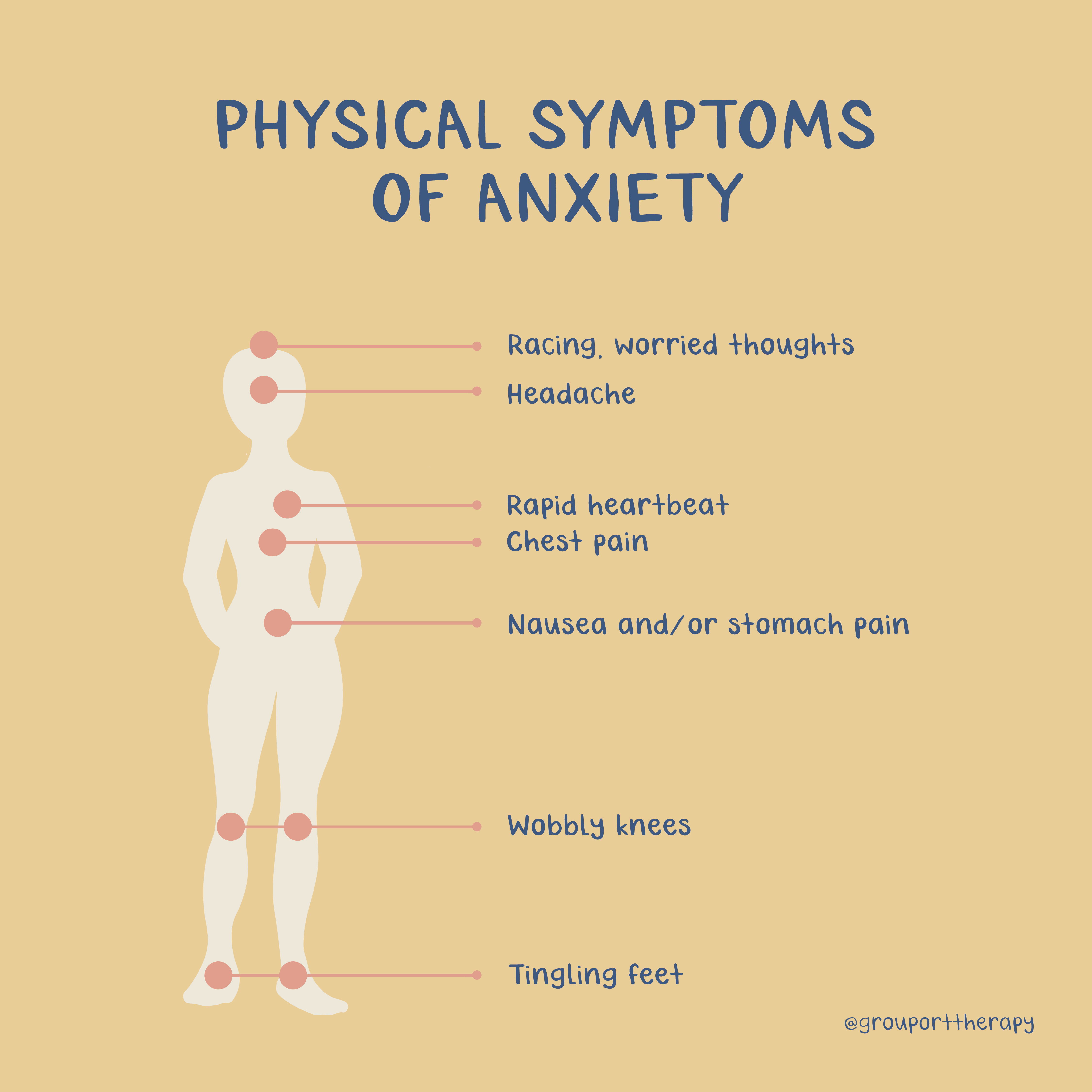
Anxiety can be one of the most frustrating, exhausting, and intense combinations of feelings we experience as humans.And even though an estimated 40 million adults in the United States suffer from anxiety, that doesn’t stop it from making us feel extremely lonely and isolated. We’re here to reassure you that you’re not alone. Yes, it’s very uncomfortable to experience your heart racing, palms sweating, head spinning, or even a sick, upset stomach. But we all feel these symptoms from time to time
Read More

Anxiety & Panic
Anxiety disorders are a set of mental illnesses that can cause major adverse effects in individuals’ lives. There are many different potential symptoms of anxiety disorders. Some common signs are including but not limited to:Difficulty sleepingGastrointestinal issuesExperiencing the urge to avoid potential anxiety triggersA heightened heart rateTremblingWeaknessExhaustionSweatingHyperventilation, or rapid breathingNervousnessRestlessnessTensenessExperience sensations of impending doom, danger, o
Read More

Anxiety & Panic
The most common psychiatric issues found in the world are anxiety disorders. While the term anxiety might bring to mind an idea of people who live in constant fear and worry about the future, in fact, this type of anxiety (anticipatory) is only one of many kinds of anxiety disorder. Types of Anxiety Among the different types of anxiety disorders, some include:Generalized anxiety disorderPost traumatic stress disorder (PTSD)Obsessive compulsive disorderPanic disordersSocial anxiety dis
Read More

Anxiety & Panic
Anxiety conditions are among the most prevalent mental health issues globally. According to the Mayo Clinic, these conditions, along with the potential panic attacks that may accompany them, can escalate to the point of causing significant disruption in everyday life. Online anxiety therapy emerges as a convenient and effective solution in this context. This article aims to delve into online anxiety therapy and its various facets.
Read More

Anxiety & Panic
Anxiety disorders are the most common psychiatric issue found among the general population (Öst, 2008). Their lifetime prevalence rate is around 33.7% (Bandelow & Michaelis, 2015), and anxiety disorders are the foremost mental disorder found in women (Chambala, 2008). Anticipatory anxiety may be considered the quintessential form of anxiety--in other words, when people hear the word “anxiety,” it is likely what comes to mind are individuals who ruminate about the future, constantly worrying
Read More

Anxiety & Panic
Mindfulness based cognitive therapy is just one of many different approaches to psychotherapy that combines techniques drawn from cognitive therapy, meditation, and the cultivation of mindfulness, which is a non judgmental attitude that is rooted in the present. Mindfulness based cognitive therapy is grounded in the belief that individuals who have a history of struggling with mental illnesses like anxiety or depression will find themselves falling back into old patterns (or cognitive processes)
Read More

Anxiety & Panic
Mindfulness is a word that describes a type of cognitive therapy associated with psychotherapy. This technique draws from meditation practices, cognitive therapy, and a non-judgmental attitude rooted in the present/reality. Mindfulness based cognitive therapy is incredibly effective because of the way it marries cognitive therapy and mindfulness practices. Cognitive therapy encourages individuals to interrupt their instinctual thought processes and instead work through their feelings in more hea
Read More
Anxiety & Panic
According to the Mayo Clinic, occasionally experiencing anxiety is considered a normal part of being a human. However, some individuals will experience anxiety to the point that they are consistently experiencing worry and fear of average situations; if that is the case, they could be living with an anxiety disorder. In general, people who are living with anxiety disorders will have repeated panic attacks, and may steer clear of certain places or situations to avoid triggering their anxiety. And
Read More

Anxiety & Panic
Anxiety disorders can manifest in a number of ways: you may experience unrelenting worries, obsessive thoughts, panic attacks, or a phobia that leaves you incapacitated. However, you must remember that there are various treatments proven to be effective available; this means that you don’t have to live with the deep fear and anxiety that might be affecting your day to day life in profoundly negative ways. For many individuals living with anxiety disorders, therapy will be the most effective way
Read More
.png)
Anxiety & Panic
In the city that never sleeps, New York City, daily life can sometimes feel like an endurance test. The constant buzz of activity, the immense crowds, the high living costs, and the rapid pace can often lead to distress, particularly for those not accustomed to the city's rhythm. This article discusses navigating distress tolerance in New York City, offering insights on maintaining emotional well-being while thriving in this dynamic metropolis.
Read More

Family Therapy
Family therapy online helps families improve communication, address recurring conflict, and understand the patterns affecting relationships at home. Learn how virtual sessions work, which concerns they may support, and when family, teen, couples, or individual therapy may be the right fit.
All Journals
Read More

Couples Therapy
Online couples therapy can help partners address repeated conflict, emotional distance, and communication breakdowns before resentment becomes harder to repair. It offers flexible, structured support for improving listening, rebuilding trust, and practising healthier conflict resolution while considering each couple’s goals, privacy, safety, and therapist fit.
All Journals
Read More

OCD & ERP Therapy
Online ERP therapy helps people with OCD gradually face triggers while reducing compulsions, avoidance, reassurance seeking, and mental rituals. Effective ERP should be therapist-guided, personalized, and carefully paced, with individual therapy, group support, family involvement, or higher-level care chosen according to symptom severity and safety needs.
All Journals
Read More

OCD & ERP Therapy
Online therapy for OCD can combine exposure and response prevention (ERP) with support groups to address compulsions, avoidance, reassurance seeking, and intrusive thoughts. ERP provides structured, therapist-guided treatment, while groups can add education, connection, and accountability, but should not replace clinical care when symptoms are severe or significantly disruptive.
All Journals
Read More

BPD & Emotional Regulation
BPD hypersexuality can involve sexual impulsivity, validation seeking, shame, and intense efforts to feel connected or avoid rejection. This guide explains how these patterns may develop, how DBT and other therapy approaches can help, and when professional or higher-level support may be needed.
All Journals
Read More

BPD & Emotional Regulation
BPD self-sabotaging behavior can affect relationships, routines, work, safety, and self-image, often during moments of intense distress, shame, or fear of rejection. Therapy may help people recognize triggers, slow impulsive reactions, practice DBT skills, and build healthier ways to pause, repair, and cope.
All Journals
Read More

BPD & Emotional Regulation
The BPD friendship cycle can make close relationships feel intense, uncertain, and emotionally exhausting. This guide explains why friendship patterns may feel unstable, how fear of rejection can affect connection, and how DBT-informed therapy may support healthier communication, repair, and emotional regulation.
All Journals
Read More

BPD & Emotional Regulation
Mild BPD symptoms may still affect emotions, relationships, identity, and coping, even when daily life appears stable from the outside. Early therapy, especially DBT-informed support, may help people recognize patterns sooner, build emotional regulation skills, and prevent repeated conflict, avoidance, or impulsive coping from becoming harder to manage.
All Journals
Read More

BPD & Emotional Regulation
Avoidant BPD is not a formal diagnosis, but it may describe patterns of withdrawal, shame, and fear of rejection linked to BPD-related struggles. Therapy, especially DBT-informed support, may help people understand these patterns, manage emotional intensity, and build safer ways to communicate instead of pulling away.
All Journals
Read More

BPD & Emotional Regulation
Group + individual therapy for BPD can help by combining private support for personal patterns, safety needs, and relationship challenges with structured group practice for DBT skills. This combination may support steadier progress by building emotional regulation, distress tolerance, accountability, and more consistent coping in real-life situations.
All Journals
Read More

BPD & Emotional Regulation
Therapy for borderline personality disorder helps people build emotional regulation, safer coping, stronger relationship skills, and more stable responses during distress. Real progress is usually gradual, showing up as fewer crisis-driven reactions, better repair after conflict, and more consistent use of DBT-informed skills and support.
All Journals
Read More

BPD & Emotional Regulation
This blog explains how therapy for BPD, especially DBT therapy, can help people manage intense emotions, relationship stress, impulsive reactions, and distress more safely. It also guides readers on how to compare BPD therapy options, including individual therapy, group skills training, online care, and self-guided DBT, based on symptoms, safety needs, and clinical support.
All Journals
Read More

Anxiety & Panic
Affordable online therapy can be a practical option for anxiety when it includes licensed support, clear structure, privacy protection, and care that matches the person’s symptoms. The blog explains why the cheapest therapy option is not always the best choice, especially if it lacks therapist access, safety guidance, personalization, or proper credentials.
All Journals
Read More

Therapy Comparisons
This blog compares online CBT programs and live therapy for anxiety, explaining when self-guided support may work and when therapist-led care is a better fit. It shows that the right choice depends on anxiety severity, daily functioning, safety, and the need for personalized support.
All Journals
Read More

Anxiety & Panic
This blog explains how therapy for adult ADHD can help when focus problems, procrastination, emotional overload, and anxiety create a cycle of stress and burnout. It covers how ADHD and anxiety overlap, how online therapy may support routines and emotional regulation, and how CBT, DBT, individual therapy, couples therapy, group therapy, or higher-support care may fit different needs.
All Journals
Read More

Anxiety & Panic
This blog explains how high-functioning anxiety can affect people who appear successful, organized, or “fine” while privately struggling with overthinking, perfectionism, tension, poor sleep, or fear of mistakes. It covers when therapy for anxiety may be useful, how online counseling can help uncover hidden patterns, and how CBT, DBT, ACT, group therapy, individual therapy, and higher-support care may fit different needs.
All Journals
Read More

Anxiety & Panic
This blog explains how online therapy for panic attacks can help people understand panic symptoms, identify triggers, and reduce avoidance before symptoms start controlling daily life. It covers what to do before panic symptoms spiral, when to seek medical help, and how CBT, DBT, group therapy, individual therapy, and higher-support care may fit different needs.
All Journals
Read More

Depression & Mood
This blog explains why the best therapy for depression depends on a person’s symptoms, support needs, privacy level, and daily functioning rather than one single treatment option. It compares CBT, DBT, group therapy, individual therapy, online care, and higher-support options to help readers understand what each approach may help with and when professional guidance is needed.
All Journals
Read More

Depression & Mood
This blog explains when individual therapy for depression may be a better fit for people who need private, focused support for mood, motivation, relationships, grief, or daily functioning. It also covers how online therapy can reduce barriers to care, how one-on-one support compares with group therapy, and what readers should consider before choosing the right depression therapy option.
All Journals
Read More

Anxiety & Panic
This blog explains how group therapy for anxiety helps people practice coping skills in realistic, supportive settings instead of only learning them in theory. It covers how anxiety affects daily life, how online therapy can improve access to care, and how CBT, DBT, ACT, and mindfulness may support symptom management. It also helps readers compare individual therapy, online group therapy, and combined care options based on their needs.
All Journals
Read More
